
Xi Jinping is investigating his most trusted general at precisely the moment China needs military readiness most. The purge of Vice Chairman Zhang Youxia in January 2026—a 75-year-old princeling who shared Xi’s revolutionary heritage and whom Xi retained beyond retirement—signals either ruthless preparation for conflict or dangerous isolation at the top. The timing raises an […]
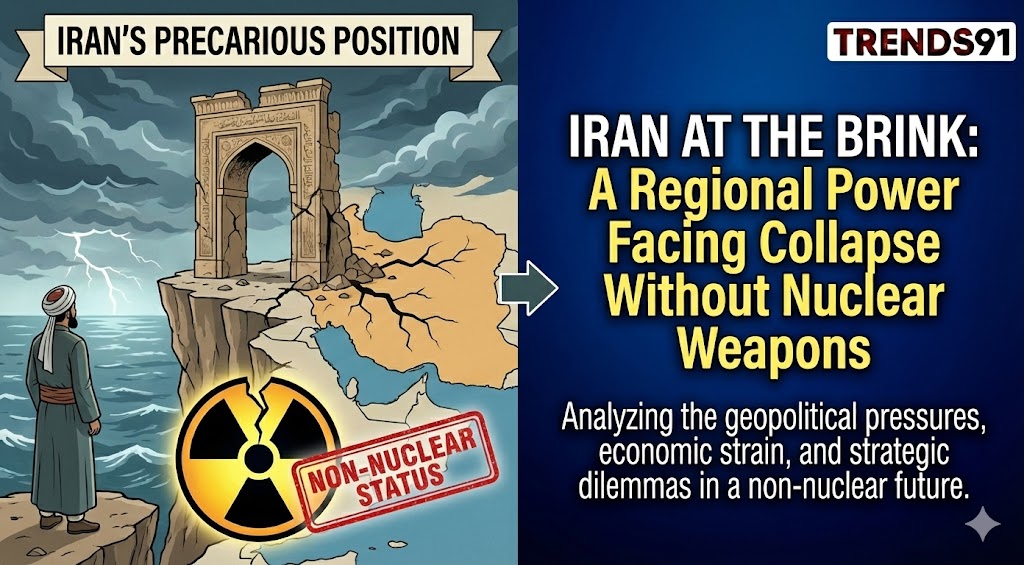
The potential collapse of Iran’s theocratic system would represent a geopolitical rupture of significant magnitude for the Middle East, but the analysis requires critical precision about Iran’s actual nuclear status. Iran does not possess nuclear weapons. Iran is not a nuclear-armed state. What Iran possesses is a nuclear enrichment program that has advanced to the […]
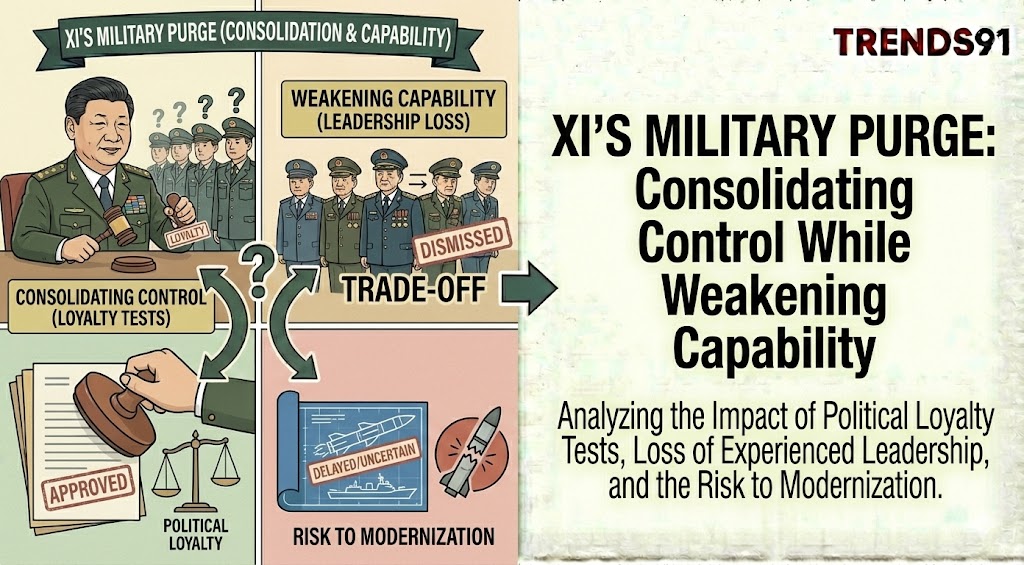
In late January 2026, Chinese President Xi Jinping oversaw an extraordinary purge of the People’s Liberation Army’s top command structure that reduced the seven-member Central Military Commission (CMC) to just two members: Xi himself and a disciplinary chief. The removal of General Zhang Youxia—Xi’s most senior military aide and, critically, the last serving PLA officer […]
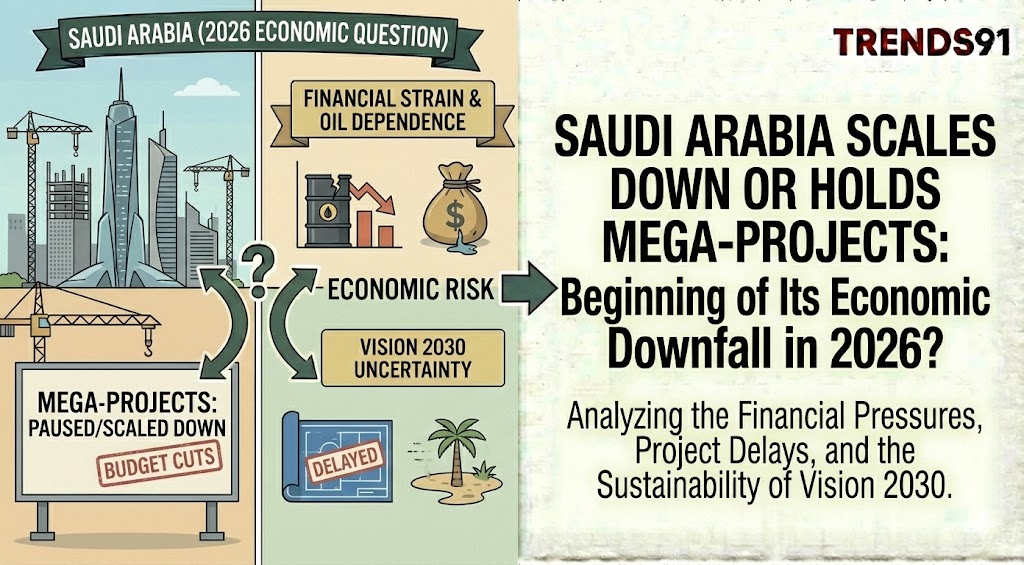
Saudi Arabia’s 2026 Inflection Point: Can Ambition Survive Austerity? Saudi Arabia faces a deceptively simple decision in 2026 that will reshape the Kingdom’s economic trajectory for a decade. The question appears binary: scale down the mega-projects that define Vision 2030, or double down despite mounting evidence of fiscal strain. Yet beneath this surface tension lies […]
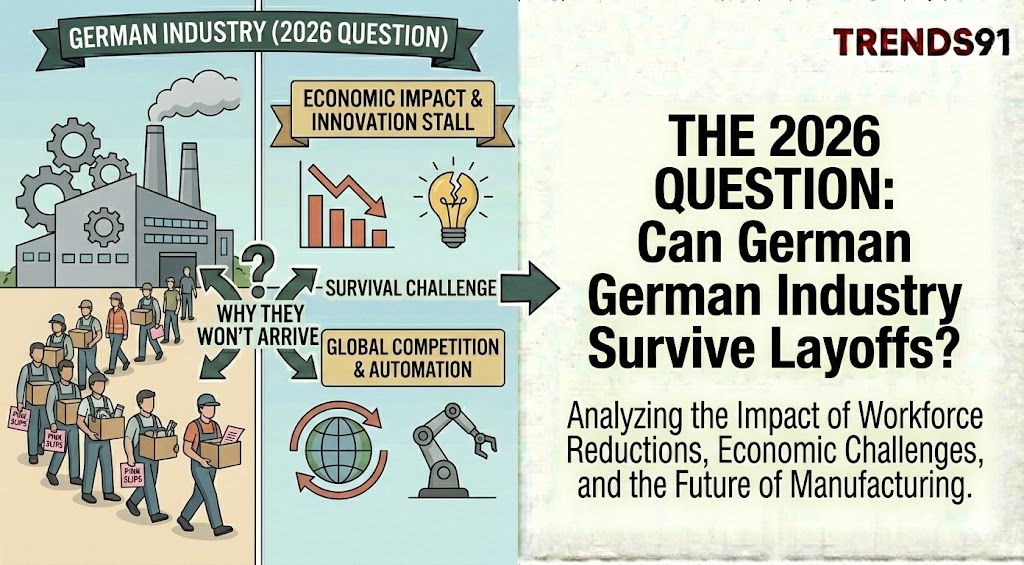
Germany’s Industrial Reckoning: Is Restructuring Survival or Slow Extinction? Germany’s industrial base is contracting at a pace not seen since the 2008 financial crisis—but with one critical difference. This time, the decline is structural, not cyclical. Over the past nine months, German manufacturers have eliminated 120,000 jobs, with automotive suppliers bearing the heaviest blow. The […]
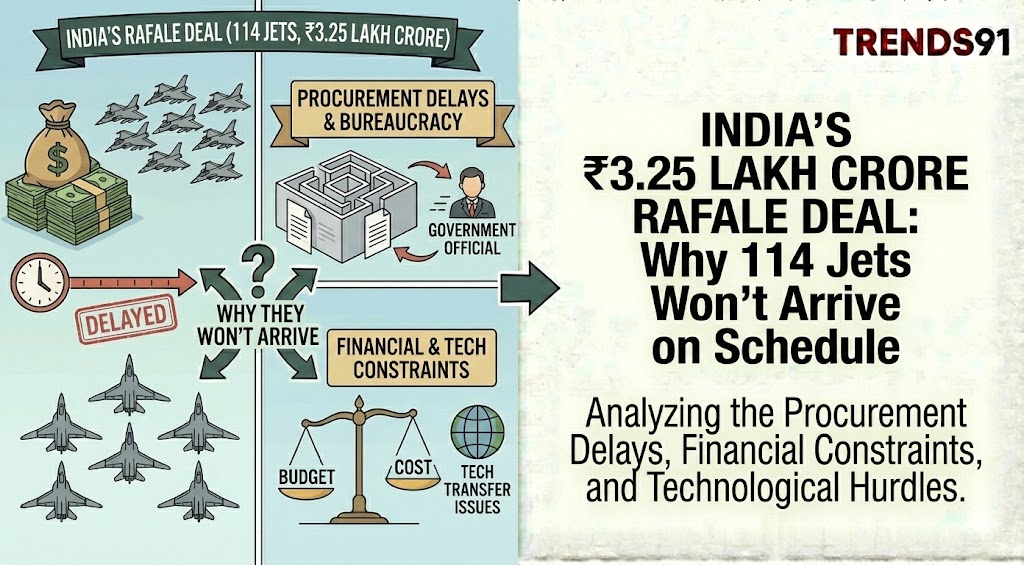
The Indian government view is optimistic: the ₹3.25 lakh crore deal can deliver 114 Rafales on a compressed timeline (18 fly-away by 2030, Made-in-India jets starting 2031). This timeline is factually impossible given Dassault’s current production constraints. The core thesis here is brutally specific: Between January 2026 and 2041, India will experience 5-7 year delays relative to […]
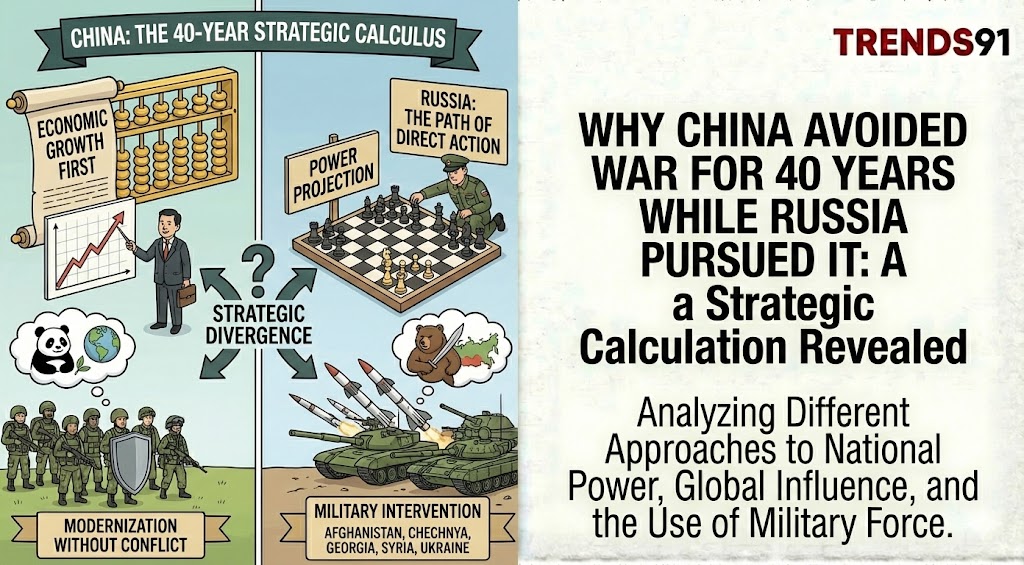
For four decades, China possessed the military capability to seize Taiwan, challenge U.S. dominance in the Pacific, or expand its territorial holdings. Yet it did not. Over the same period, Russia—economically weaker and militarily inferior to China—engaged in military conflicts with Georgia (2008), Ukraine (2014), and a full-scale invasion (2022). The conventional wisdom attempts to […]
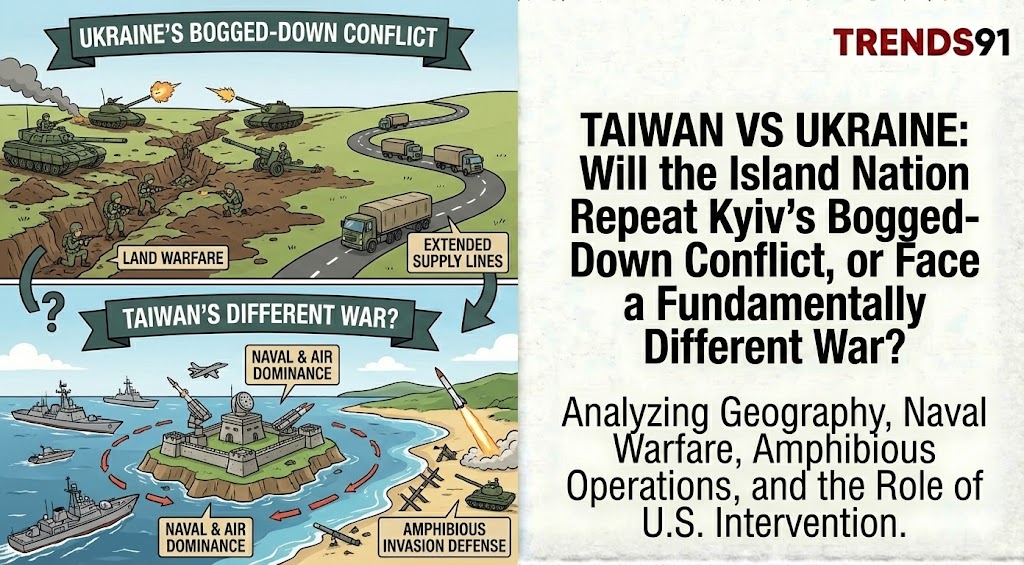
Taiwan does not face the prospect of becoming another Ukraine—a nation locked in a grinding, years-long land war of attrition. Instead, Taiwan faces something more precarious: a conflict that will be decided in weeks, not years, and will hinge on phenomena that Ukraine never experienced: naval blockade, amphibious assault, and the absence of contiguous alliance […]
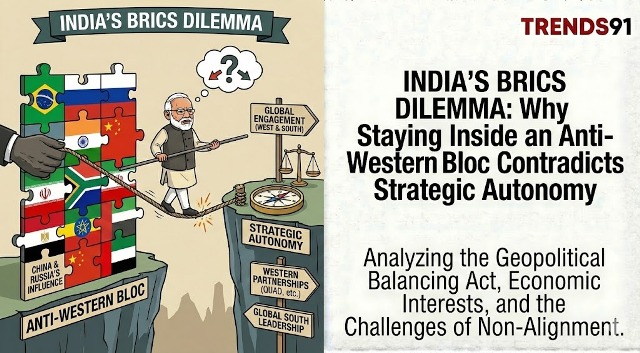
India’s decision to opt out of the “Will for Peace 2026” BRICS naval exercises in January 2026—despite holding the BRICS chair that same year—is not a tactical maneuver but a declaration of structural incompatibility. While Indian officials framed the absence as a technical clarification (the exercises were “not institutionalized” BRICS activities), the underlying logic reveals […]
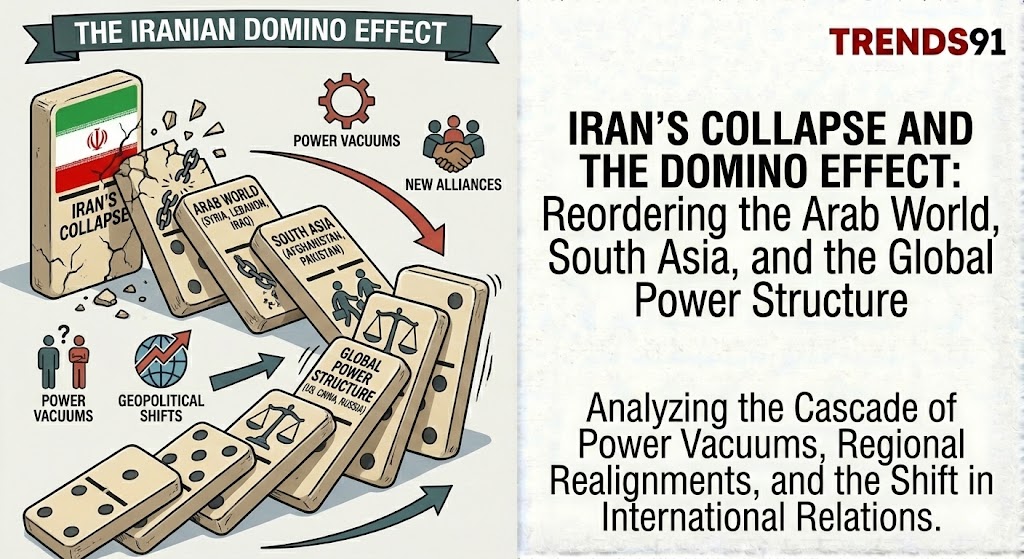
Iran’s potential regime collapse—triggered by cascading internal economic crises, military defeats inflicted by Israel and the United States, and mass anti-government protests beginning December 28, 2025—represents the most consequential geopolitical rupture in the Middle East since the Syrian civil war. However, unlike the Syrian case, Iran’s collapse will generate shockwaves far beyond the Levant, destabilizing […]
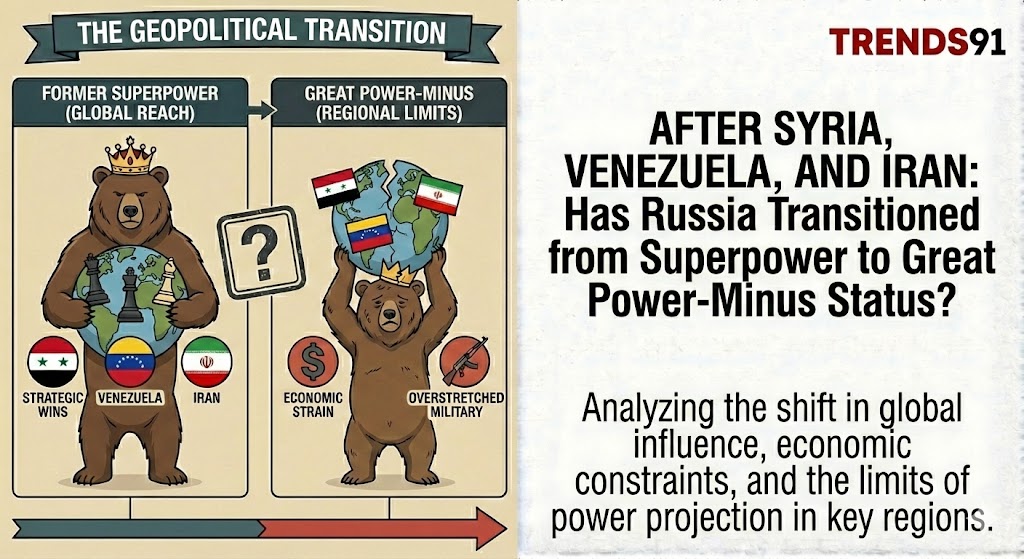
Russia’s recent geopolitical losses—the fall of Bashar al-Assad’s regime in Syria (December 2024), the capture of Nicolás Maduro in Venezuela (January 2026), and its refusal to provide military support to Iran during a twelve-day conflict with the United States and Israel (2025)—present a critical inflection point in assessing Russian power status. The question whether Russia […]

Can Europe Sustain 2 Million Shells Per Year Once Powder Bottlenecks Determine Output? The establishment consensus holds that the EU’s €500 million ASAP (Act in Support of Ammunition Production) program, combined with €1.5+ billion in follow-on industrial financing, represents a rational industrial policy designed to rebuild European munitions capacity and achieve the politically-binding target of […]

The establishment consensus holds that the United States will deliver 50-100+ operationally-capable hypersonic missiles by the end of fiscal 2027, with Lockheed Martin’s LRHW (Long-Range Hypersonic Weapon), Raytheon’s HACM (Hypersonic Attack Cruise Missile), and the Navy’s CPS (Conventional Prompt Strike) all reaching initial operational capability or production readiness. This conclusion is demonstrably false based on […]

Can European Navies Deploy 15 New Frigates by 2030? The establishment view in Brussels, Berlin, and Paris is that Europe’s coordinated naval procurement, backed by political will and fresh funding, will successfully deliver a new generation of frigates on time. This view is catastrophically wrong. My core thesis is that Europe’s three major naval consortiums—Fincantieri, […]

Can Western Semiconductor Alliances Survive Industrial Subsidy Competition? The establishment consensus holds that the CHIPS Act and related semiconductor initiatives globally represent a rational, coordinated effort to secure democratic supply chains against authoritarian dependence. This conclusion is catastrophically wrong. The core thesis: The CHIPS Act functions as strategic enclosure rather than alliance coordination—a $52.7 billion subsidy […]